
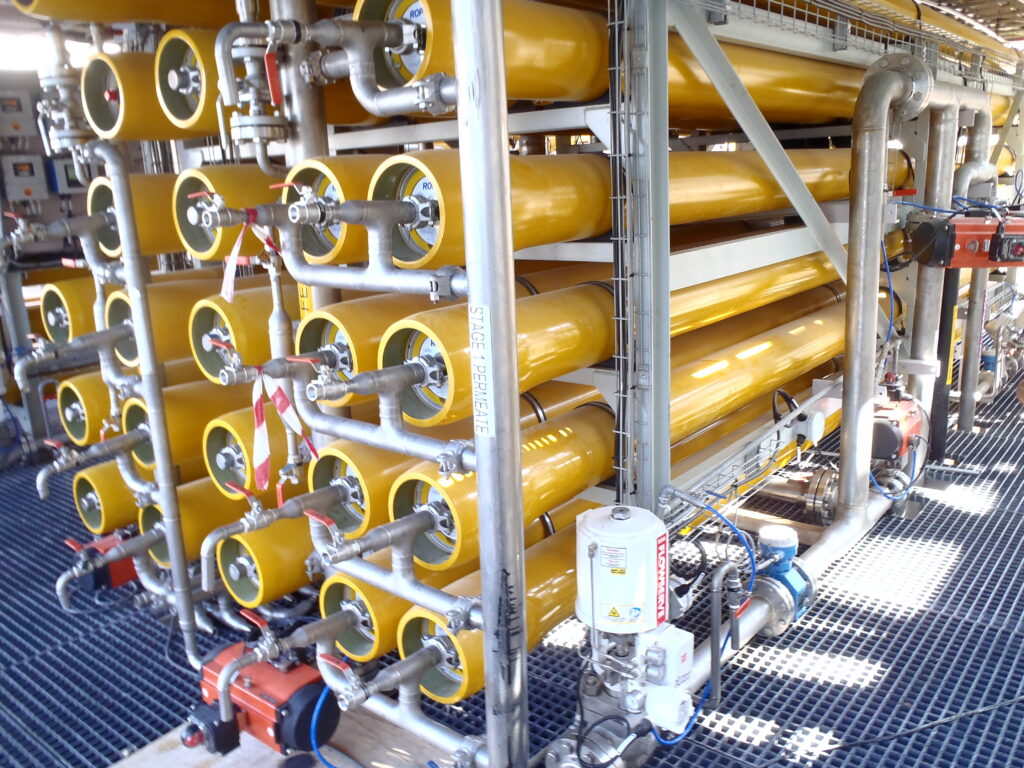
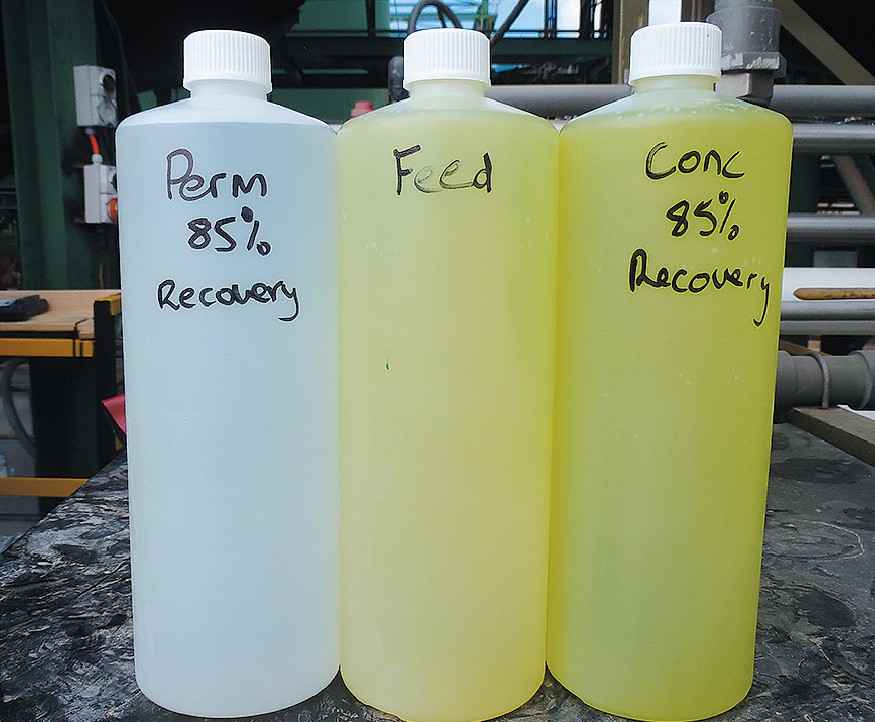
Membrane filtration is a mechanical separation process that uses a semi‑permeable membrane to remove particles, microorganisms, or dissolved solutes from a fluid. When pressure is applied, selected components pass through the membrane to form a clean permeate stream, while the materials that cannot pass are retained on the feed side and become the concentrated reject.
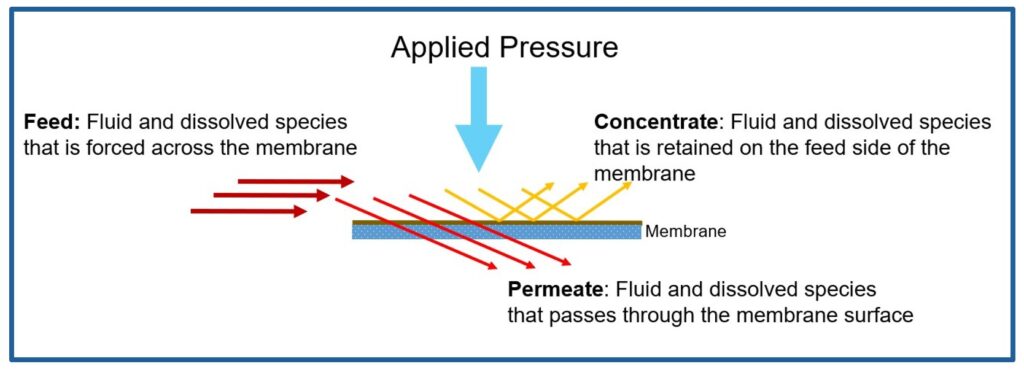
Membrane selectivity is primarily governed by particle size, although chemical interactions become increasingly important in finer filtration processes.
Effective separation requires the feed pressure to exceed the liquors natural osmotic pressure. The feed pumps therefore operate at high flow rates and speeds to maintain the necessary operating pressure.
Nanofiltration (NF) treats the UF permeate to reject large divalent ions from smaller monovalent ions. Membrane pore sizes are typically 1 nm and are rated by Molecular Weight Cut-Off (MWCO). The MWCO is typically less than 1,000 atomic mass units (Daltons) though some membranes can be as high as 20,000 Daltons.
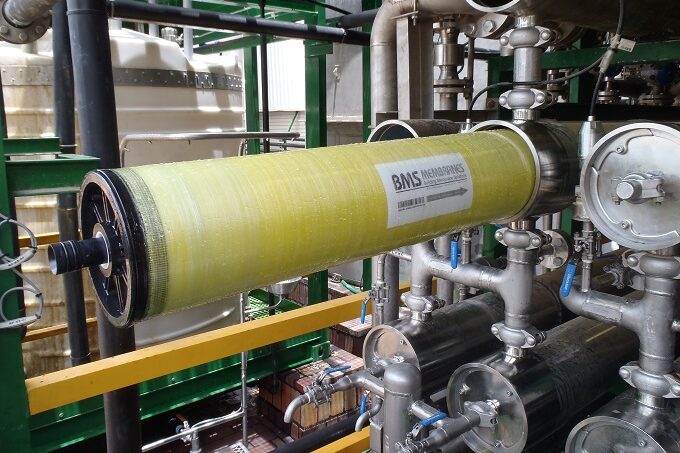
Reverse osmosis (RO) is the finest level of filtration available. RO membranes act as a barrier to all dissolved salts and inorganic molecules, as well as organic molecules with a molecular weight greater than approximately 100 g/mol. Water molecules pass freely through the membrane creating a purified product stream, whilst rejection of dissolved salts is typically 95% to 99%.
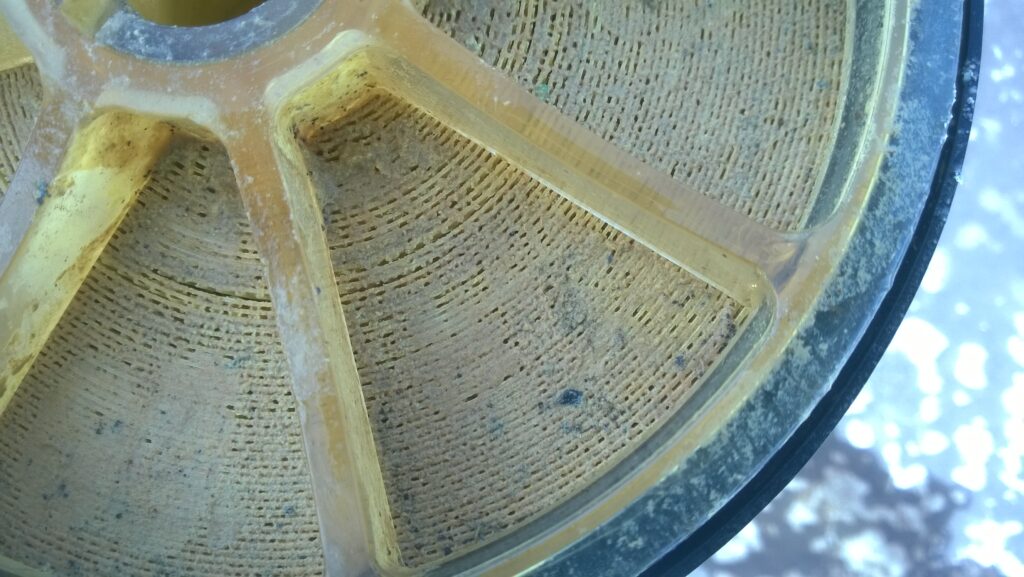
Membranes tend to foul over time through the accumulation of contaminants on the membrane surface. A Clean-In-Place (CIP) system forms part of BMS Engineers design and control philosophy to restore membrane performance. During a CIP sequence, membranes are cleaned within their housings by means of backflushing and circulating cleaning fluids.
BMS Engineers work closely with specialist membrane manufacturers to develop tailored solutions to improving our clients’ plant process